Fear Wearing the Mask of Practicality
A note on writing Vera*, and the sentence I could not stop hearing.*
I have been thinking about a sentence for a long time. Not a sentence I wrote. A sentence I lived inside, and watched the people I love live inside, often without naming.
We call it wisdom when we do not apply for the thing. We call it responsibility when we do not send the letter. We call it practicality when we shrink the shape of our lives to fit a smaller room. And we call it too late, somewhere in the middle of a Tuesday, on the way home from a job that was supposed to be temporary, when we realize that the person we were afraid to become was the person we were meant to be all along.
I wrote Vera because of that sentence.
A Photographer Who Stopped
Chara is thirty-four when the book opens. Her mother died twelve years earlier. Inside that death she folded up the photography career she had been reaching for and went home to her family's farm in Colorado. She tells herself it is responsibility. Wisdom. Care for her aging father. She is not wrong about any of those words. None of them is the real word.
The real word is fear.
I have watched this pattern in people I love. I have watched it in myself. The dream gets quiet. The dream does not die. It waits. And one day the person who made all the practical choices wakes up and realizes the practical choices added up to a smaller life than the one she had been given.
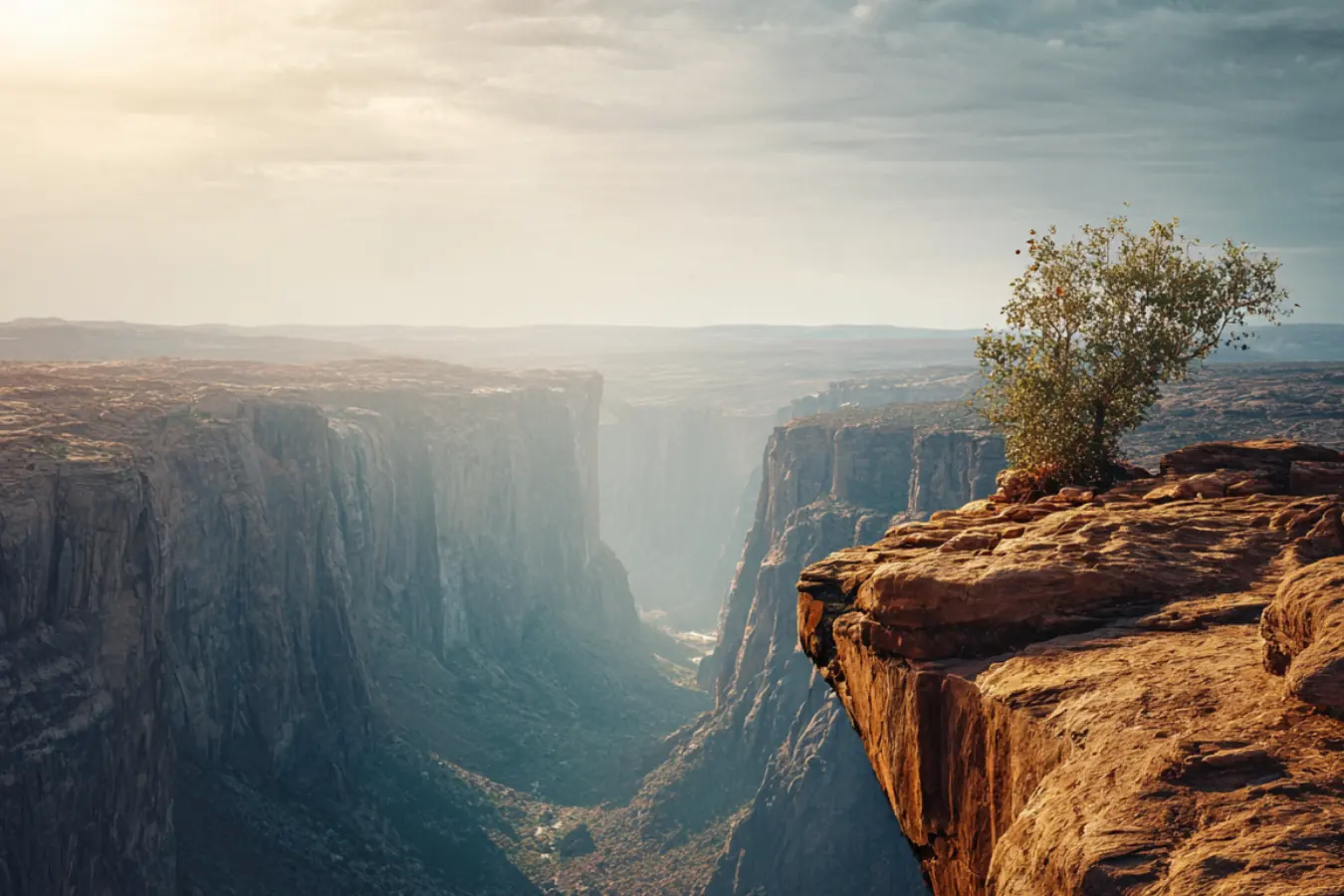
Vera begins on the day Chara's smaller life gives way under her feet. Not as a metaphor. The trail crumbles. She falls. Her leg shatters. Her phone dies. She lands on a ledge in a Colorado canyon, alone except for a hosta plant that has been growing there for seven years.
That is when the book turns.
A Plant Who Was Waiting
The plant has a name. The book is named after her. Vera is half about Chara. The other half is about the hosta, told from the hosta's own consciousness.
I know how that sounds. I will tell you I did not set out to write half a novel from a plant's perspective. I set out to ask a question. The question was: what does it mean to be truly seen by another consciousness, and do we hunger for that more than we admit? Somewhere around the third draft, the answer needed a witness who had no agenda. No camera. No advice. No skin in any of Chara's games. Only attention.
A plant turned out to be that witness.
Vera, the hosta, was lifted from a Colorado nursery by a tornado and dropped into a crack in canyon stone seven years before Chara fell onto her ledge. She has spent those years growing. Catching what rain finds her. Holding. She has no audience. She does not know why she has been planted in stone. She trusts the Gardener who plants where He will, and she does the work of staying alive without asking for proof.
She sees Chara. She pays attention to Chara. That is most of what passes between them on the ledge. It is also most of what the book is about.
Being Witnessed
I want to be careful with the phrase being seen. It has been used until it has gone smooth. Being seen is not the same as being noticed. It is not the same as being praised. It is not the same as being understood.
Being seen, the way Vera and Chara come to mean it, is closer to being held. Without judgment. Without fixing. Without anything but presence. The kind of attention that does not look away when the thing it is looking at is unfinished.
This is not a romance novel. Chara does not get a partner at the end. She is forty-one in the epilogue, single, reaching for her work again, more herself than she has been in two decades. That ending was a choice. So many books say wholeness has to come through another person who completes you. Vera says something different. Vera says you do not need to be completed. You need to be witnessed. Sometimes the witness is a person. Sometimes the witness is a hosta on an impossible ledge. Either way, the seeing is what calls you back into your own life.
Where to Find It
Vera launched on April 1. It is available in Kindle, paperback, hardcover, and audiobook. The paperback is on Amazon and through Bookshop.org, which supports an independent bookstore. The Kindle edition is free to read with Kindle Unlimited. The audiobook is on Spotify, Barnes & Noble, and Kobo.
If you read it, leave a review where you bought it. For a book this small, this strange, this much its own shape, every review is the difference between the algorithm finding new readers and the algorithm letting it go. I would not ask if it did not matter.
If you came here through Still Garden, Vera is not a sequel. It sits in the same soil. If you came here through Eileen's Frances the Hosta series, you have met one of Vera's nursery friends; the older hosta Frances mentored her there before the storm.
Wherever you came from: thank you for reaching. The reaching is the thing the book is about.
Subscribe to From the Still Garden
A quiet newsletter from Cisco Mills, sent when there is something to send.