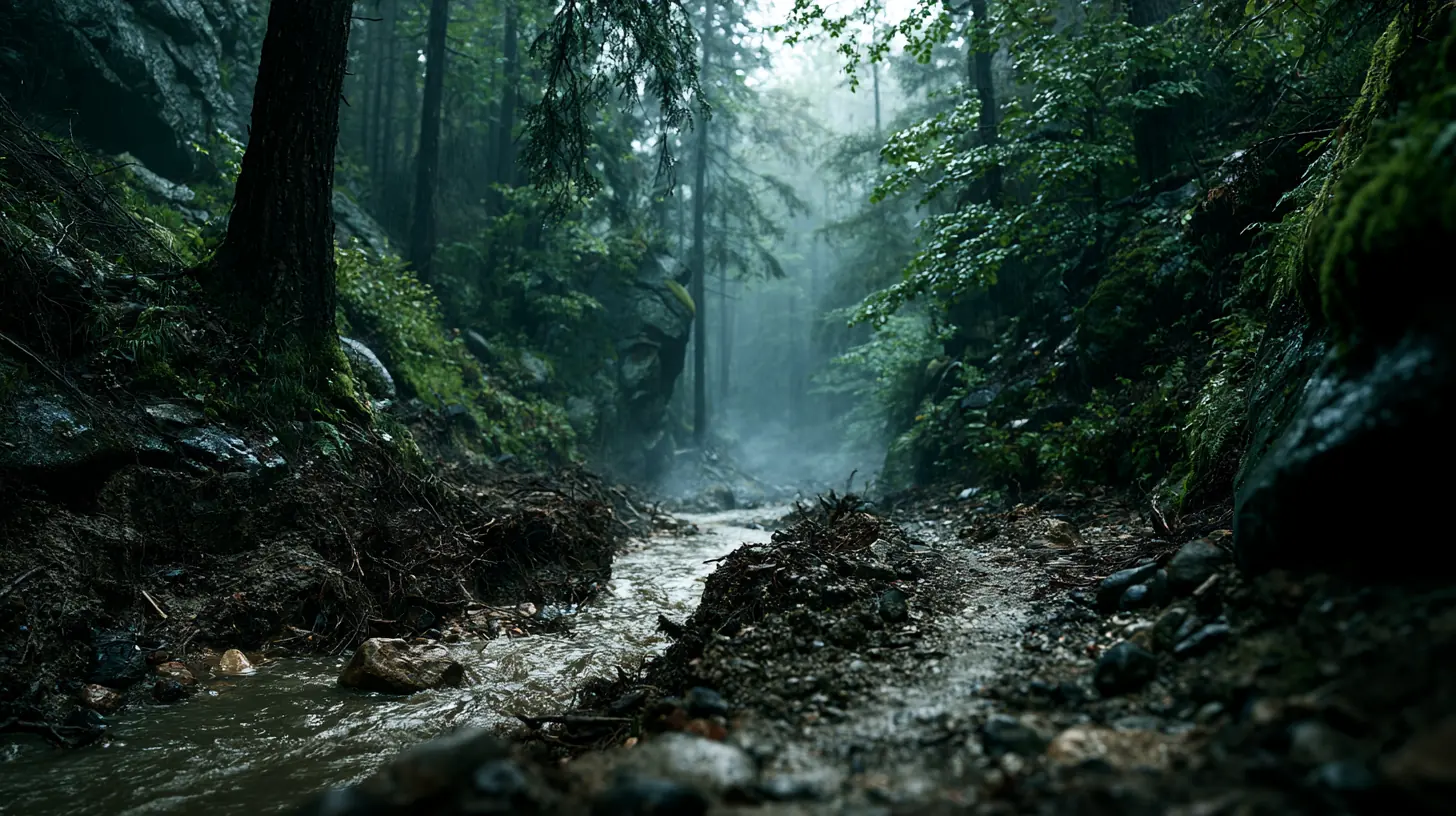
In towns that flood, you can find the line if you know where to look. A stain on the brick a few feet above the sidewalk. A band of dried silt on a fence post. A pencil mark inside a garage door frame with a year written beside it. The water left. The line stayed.
That image sat under Floodline for a long time before Brandon Reese did.
The question I kept circling was this one: what does a person do with suffering when the suffering is real, the anger is earned, and the road the anger wants to take would make him less human?
Pain does more than hurt. It argues. It tells a person what they are allowed to become now. It tells them restraint was foolish and mercy is a cost they cannot afford twice. Some grief stays inside the hour it happened. Other grief rises. It enters rooms it has no business in. It marks sleep, work, prayer, the way a man takes a cup of coffee from someone who means him well.
Brandon is a former soldier and police officer who held his fire when a child stood in the line of it. It was the right call. The world answered it with the worst outcome it had. By the time the chase ended, his wife and daughter were gone, and the man he let go was beyond the reach of anything Brandon could bring to him.
He comes to Alder Creek, a wet valley town in the Pacific Northwest, to run field oversight for a volunteer trail safety program. Distance looks like safety to him. A job, a season of weather, enough miles that whatever is in him cannot reach anyone else.
Distance is not change. Weather is not absolution. And the valley has no interest in what he carries. The rim saturates before it looks unsafe. The Blackrun cut gathers whatever the slopes above release. South Fork looks passable after it has stopped being safe. Five volunteers depend on his read of all of it, and his read of the ground is sharper than his read of himself.
I did not want to write a revenge story that asks you to cheer for the worst thing in a wounded man. I did not want a faith story where the right verse arrives on schedule and cleans the wound for the reader. Brandon has not prayed in eight weeks. When he tries, the sentence turns into an accusation before it reaches the third word. The book lets that stand. You do not accuse an empty room.
What Floodline asks is narrower and harder: whether the loudest thing in a man has to become the ruling thing. The worst thing in Brandon is real. It is not the whole truth of him.
This is harder ground than Still Garden or Vera. I know that. It is a book for people who live below or beside a mark like the one on that brick, who keep going to work and answering the phone and crossing the yard in the rain, who can point to the line and say: this is where it reached.
Floodline is out now in paperback and on Kindle, where it is free to read with Kindle Unlimited.
If the book stays with you, an honest review on Amazon helps it find the next reader. A few lines is enough.
Cisco